How is Entreprana different?

Different tools for different moments.
We created this comparison table to help you choose the kind of support that fits the situation you’re in, without judgment or one-size-fits-all advice.
Different tools for different moments.
Tools like meditation apps, therapy, and Entreprana are often grouped together, but they’re designed for different moments and needs.
We created this comparison table to help you choose the kind of support that fits the situation you’re in, without judgment or one-size-fits-all advice.

+ meditation apps

Calm, as well as other meditation apps like it, are designed to help you relax, unwind, and reduce stress through mindfulness, breath work, and sleep-focused practices. It’s typically used during downtime, quiet moments, or before sleep, drawing from a large library of generalized content that users select manually, with recommendations shaped by browsing history.
Calm encourages slowing down and disengaging from stimulation, offering near-term calming and soothing effects. Session length varies widely depending on the content, and the experience is best suited for people prioritizing rest, meditation, and relaxation.
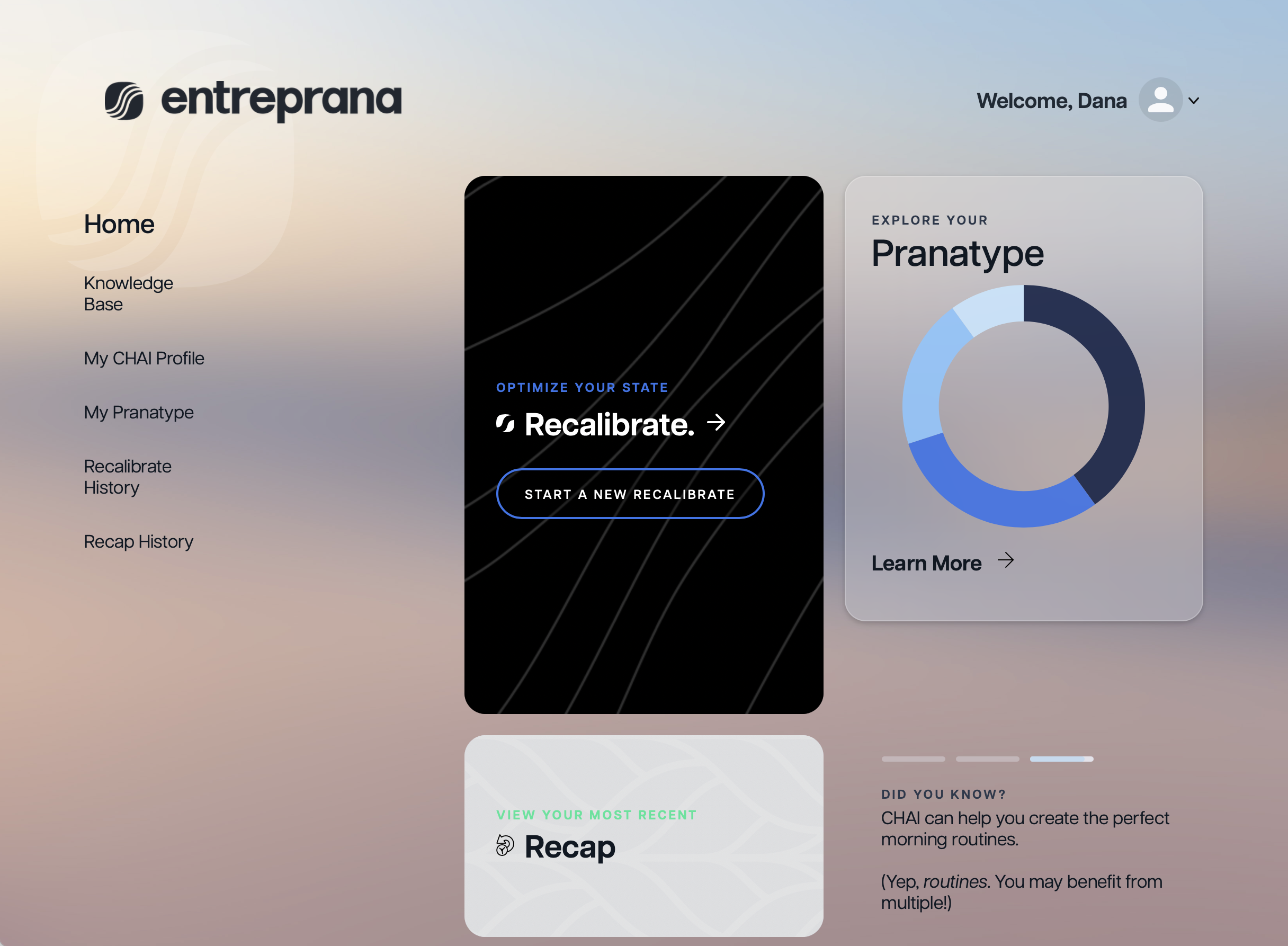
Entreprana is among the first tools of its kind— designed for real-time recalibration when life is in motion. It helps you regain clarity, energy, and effectiveness before or after high-demand moments, using a blend of classic and cutting-edge behavioral science delivered through tailored, low-friction guidance.
With minimal input, Entreprana adapts guidance to your current state, energy, and stress patterns, supporting intentional pacing — helping you act, pause, or adjust based on what your system actually needs. Sessions are brief (often around five minutes), making it easy to stay resilient, expand capacity, and show up intentionally without stepping totally away from your day.
Therapy
Therapy is designed for deep, long-term work around emotional, psychological, or behavioral challenges. It takes place during scheduled sessions with a licensed mental health professional and involves intentional slowing down, reflection, and insight-building through conversation or other therapeutic modalities.
Therapy is highly personalized through ongoing clinical relationship and requires significant cognitive and emotional effort. Progress tends to be gradual and cumulative, with typical sessions lasting around 55 minutes, making therapy especially well suited for people working through trauma, mental health concerns, or deep patterns that impact their ability to thrive day to day.
+ meditation apps
Therapy
Tool's primary purpose:
When the tool is used:
Relationship to momentum:
Level and type of personalization:
Cognitive load required:
Guided, brief, and designed for moments when capacity is limited.
Requires choosing content and sustained attention.
Requires reflection, articulation, and emotional effort.
Scope of change and progress:
Time investment:
Immediate support through steadying or invigorating effects, with increased awareness and capacity over time.
Average session length = 5 minutes.
Near term calming effects through content and practice.
Session length varies greatly.
Gradual, long-term progress.
Average session = 55 minutes.
Best for:
To build a thriving life, humans need
Support that respects the whole human system.
Our
Board of Advisors
Advisor 1

Advisor 2

Advisor 3

Login. Recalibrate. Logout. Go crush it.
Your effectiveness dashboard awaits.